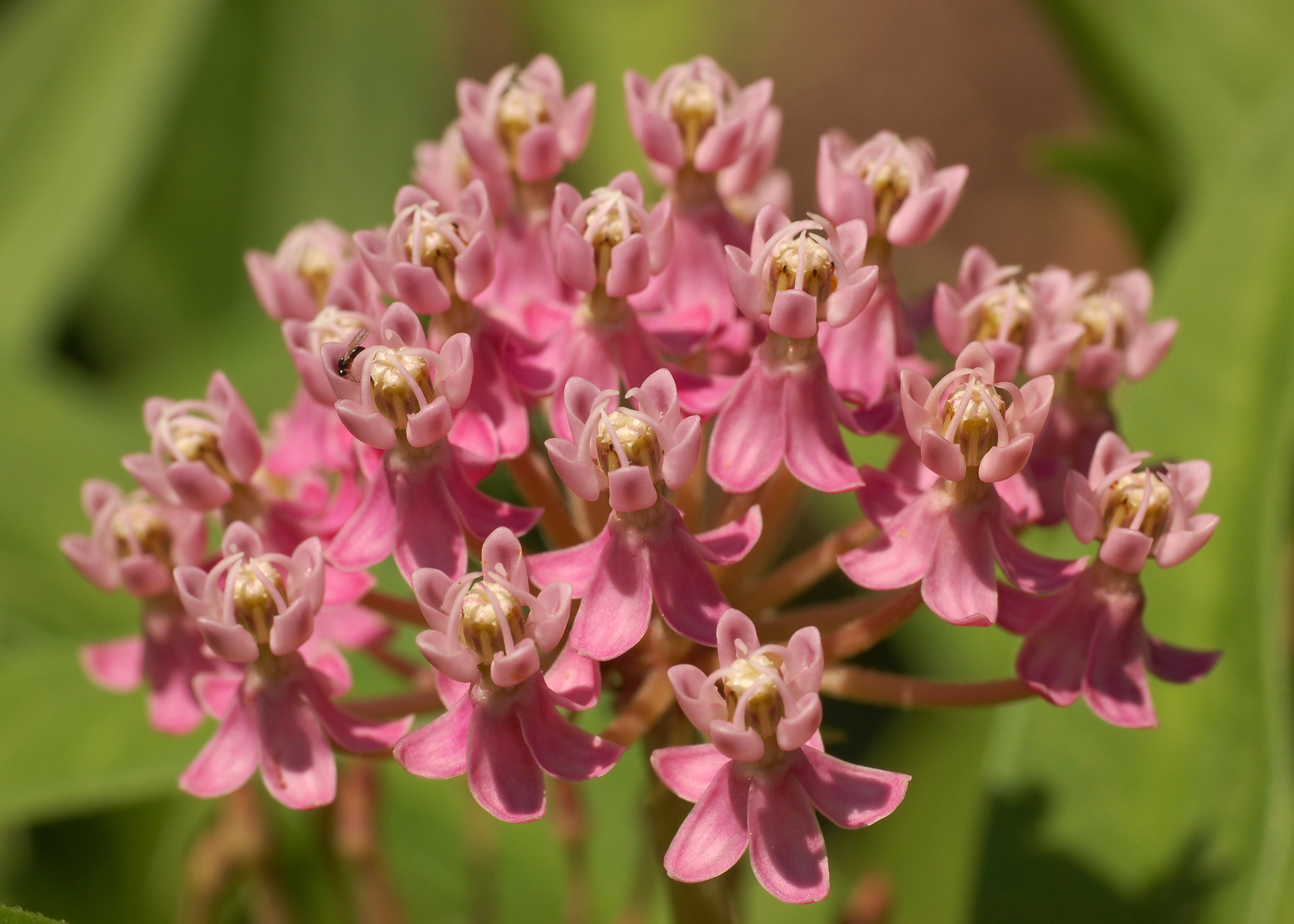
Swamp milkweed is one of the more forgiving native milkweeds for Canadian gardens. Unlike common milkweed, which spreads by aggressive rhizomes, swamp milkweed grows as a clump and stays where it is planted. It earns its place in a pollinator planting on two counts: monarch butterflies lay eggs on it and their caterpillars feed on its leaves, and the flowers themselves are heavy nectar producers for bees, wasps, and other butterflies.
Why monarchs depend on milkweed
Monarch caterpillars feed only on plants in the milkweed group. Without milkweed in the landscape, a monarch cannot complete its life cycle. That single dependency is the reason milkweed appears in almost every pollinator-planting recommendation across its range. Swamp milkweed is a practical choice because it suits ordinary garden beds and rain-garden edges rather than dry waste ground.
Where to site it
- Full sun to light afternoon shade.
- Soil that stays moist — pond edges, ditch margins, low spots, or beds that are watered.
- Room for a clump that reaches roughly waist height by late summer.
Milkweed sap is mildly irritating to skin and eyes. Wash your hands after cutting stems, and keep the white sap away from your face.
The bloom window and its visitors
In southern Canada, swamp milkweed typically flowers across mid to late summer. During that window the flower clusters are worked steadily by bumble bees and other native bees, and the plant frequently appears in monarch sightings because adults nectar on it while females also lay eggs nearby.

Seasonal upkeep
- Spring
- Cut last year's dead stems to the ground; new shoots emerge late, so mark the clump.
- Summer
- Keep soil moist during flowering; leave eggs and caterpillars undisturbed.
- Autumn
- Let pods ripen if you want seed; otherwise the stems can stand for winter structure.
Collecting seed
Pods split open in autumn to release seeds carried on silky floss. Collect pods just as they begin to crack, before the wind takes them. A short cold-moist period over winter improves germination, which is why autumn sowing or refrigerated stratification is commonly used.